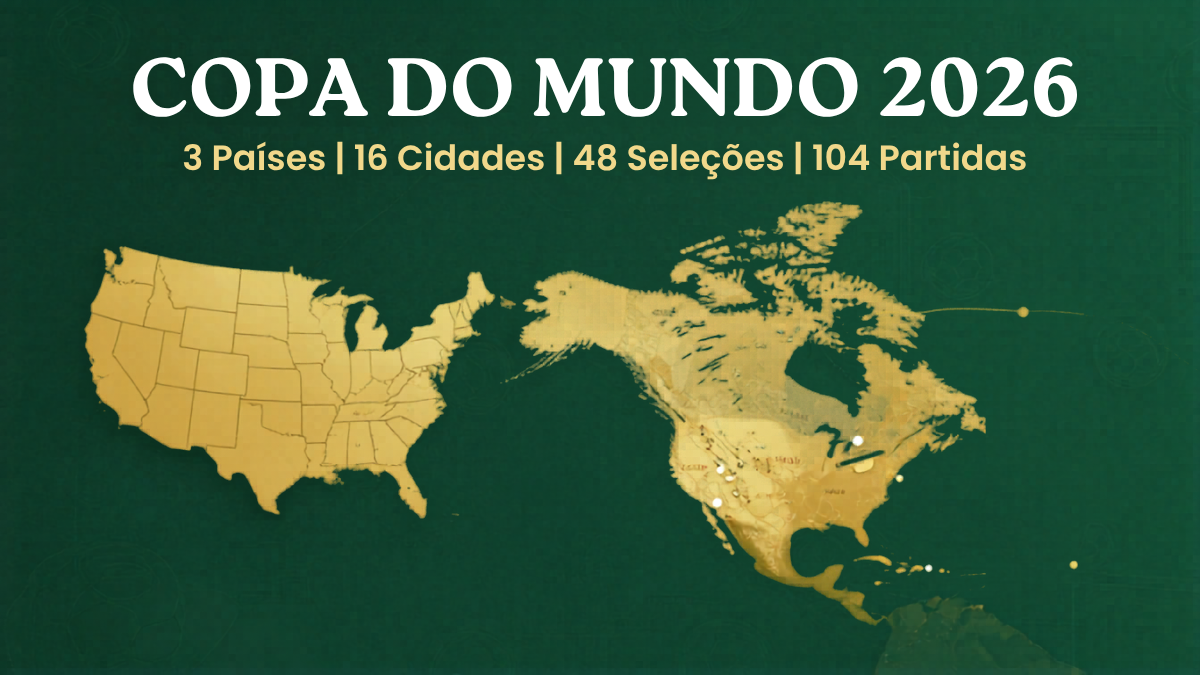
A Copa do Mundo de 2026 já entrou para a história antes mesmo da bola rolar. O principal motivo é a maior reformulação estrutural já promovida pela Fifa: o abandono do formato tradicional com 32 países para dar lugar a um torneio massivo, continental e com proporções jamais vistas no esporte moderno. Para os apaixonados por futebol, torcedores e analistas esportivos, entender a nova engrenagem da competição é fundamental. Afinal, a inclusão de mais países altera completamente a preparação física, a estratégia dos técnicos, a logística de viagens e o peso de cada partida dentro das quatro linhas.

The Practical and Logistic Challenge of a 104-Match Tournament
The major shift in this edition is the historic expansion from 32 to 48 teams competing for the planet's most coveted trophy. This FIFA decision opened the World Cup doors to nations that rarely had the chance to feature on the main stage, making the event the most global and inclusive celebration of all time. On the other hand, this democratization of football had a direct and overwhelming impact on the number of matches. The tournament jumped from the old format of 64 clashes to a staggering total of 104 matches.
To handle this football marathon without completely exhausting the athletes' physical limits, the tournament's duration had to be extended to 38 days of competition. The action begins on June 11, and the grand final will crown the champion on July 19.
Beyond the increase in dates, the logistical backstage faces a triple challenge: for the first time, the World Cup is being hosted by three countries simultaneously—the United States, Mexico, and Canada. Crossing borders, adapting to different time zones, and facing varied climates within a few days requires meticulous planning from coaching staff, transforming backstage operations into a true battlefield.
How the New FIFA Group Stage Works and the Math Behind the Spots
The mathematics of the groups has also changed drastically, burying the model that fans had been used to since 1998. Instead of the traditional eight groups of four teams, the 2026 World Cup will feature 12 groups of 4 teams each. This change ensures that every country plays at least three times in the first phase, maintaining commercial appeal and excitement for fans who traveled long distances to support their national teams.
The Drama of the Best Third-Placed Teams
Qualifying for the knockout stage has become more flexible, but also much more unpredictable and mathematical. Advancing to the elimination phase are the top two teams from each of the 12 groups and, here comes the big novelty, the eight best third-placed teams overall.
This new dynamic promises to eliminate lack of interest and "collusion matches" in the final round of the first stage. Almost every team will reach the third match with real chances of advancing, either through a direct spot or via the technical index wild card. Analysts will need to follow along with calculators in real time, as a single goal scored or a yellow card received could be the tiebreaker that puts a team in the round of 32 or sends them back home.
The Debut of the New Knockout Stage: The Path to the Trophy Just Got Longer
Para os times que avançarem da fase de grupos, o desafio físico e psicológico será dobrado. O novo desenho do torneio introduziu uma rodada eliminatória inédita no futebol de seleções moderno: os dezesseisavos de final (em que 32 seleções se enfrentam em jogos únicos de eliminação direta), que acontecem logo após a primeira fase.
Isso significa que a margem de erro zerou mais cedo. No formato antigo, avançar de fase significava estar nas oitavas de final, a apenas quatro passos do título. Agora, o funil aperta com uma fase a mais de morte súbita. Se o nervosismo já era alto nas oitavas, imagine uma fase anterior em que equipes tradicionais podem cair diante de uma zebra logo no primeiro confronto eliminatório.
The Survival Test and Squad Depth
Anyone who wants to lift the planet's most coveted trophy on July 19 will have to play 8 matches in total, one more than the model that stood for the last few decades. This extra match alters the entire squad rotation planning.
Managers will no longer be able to rely on just 11 absolute starters. Injuries, card suspensions, and the fatigue accumulated from transcontinental travel will make bench players hold a fundamental role. National teams with deeper squads, where the technical level doesn't drop when starters are rested, start with a massive advantage in this survival marathon.
Structure and Backstage: The Financial and Cultural Impact of Gigantism
Behind the spectacle on the pitch, the structure built for the 2026 World Cup moves billions of dollars and redefines sports tourism. Host cities like New York, Mexico City, and Vancouver have invested heavily in modernizing their stadiums and transport networks to welcome millions of tourists from all corners of the world.
For FIFA, the 104 matches format represents an absolute record in ticket sales, TV broadcasting rights, and sponsorship contracts, consolidating football as the biggest entertainment product on the planet. For the fans following "Além do Placar 2026", this World Cup will not just be the biggest in numbers, but a human, tactical, and cultural laboratory that will dictate the direction of the sport for generations to come. Gigantism has arrived, and football will never be the same.
Leia também nas seleções
Para aprofundar este tema com base em realidades nacionais específicas, leia também os textos sobre algumas seleções participantes da Copa de 2026. Neles, o Beyond the 2026 Scoreboard observa direitos humanos, sustentabilidade, cultura, migrações, desigualdades e desafios sociais em diálogo com o futebol e com a história de cada país.
- Irã na Copa 2026
- Japão na Copa 2026
- México na Copa 2026
Fontes de referências
FIFA. Copa do Mundo da FIFA 2026: informações oficiais sobre formato, seleções participantes, calendário, grupos, cidades-sede e estádios.
FIFA. Calendário oficial da Copa do Mundo da FIFA 2026, com a programação das 104 partidas.
FIFA. Guia das eliminatórias para a Copa do Mundo da FIFA 2026 e distribuição de vagas por confederação.
FIFA. Informações sobre os grupos, critérios de classificação e formato da fase final da Copa de 2026.
FIFA Council. Decisão sobre a ampliação da Copa do Mundo para 48 seleções a partir da edição de 2026.
FIFA. Estratégia de sustentabilidade da Copa do Mundo da FIFA 2026, com informações sobre sedes, jogos e impactos organizacionais.
FIFA. Informações sobre distribuição financeira, premiação e participação das 48 associações classificadas para a Copa do Mundo 2026.
Leave a Reply